
Executive Summary
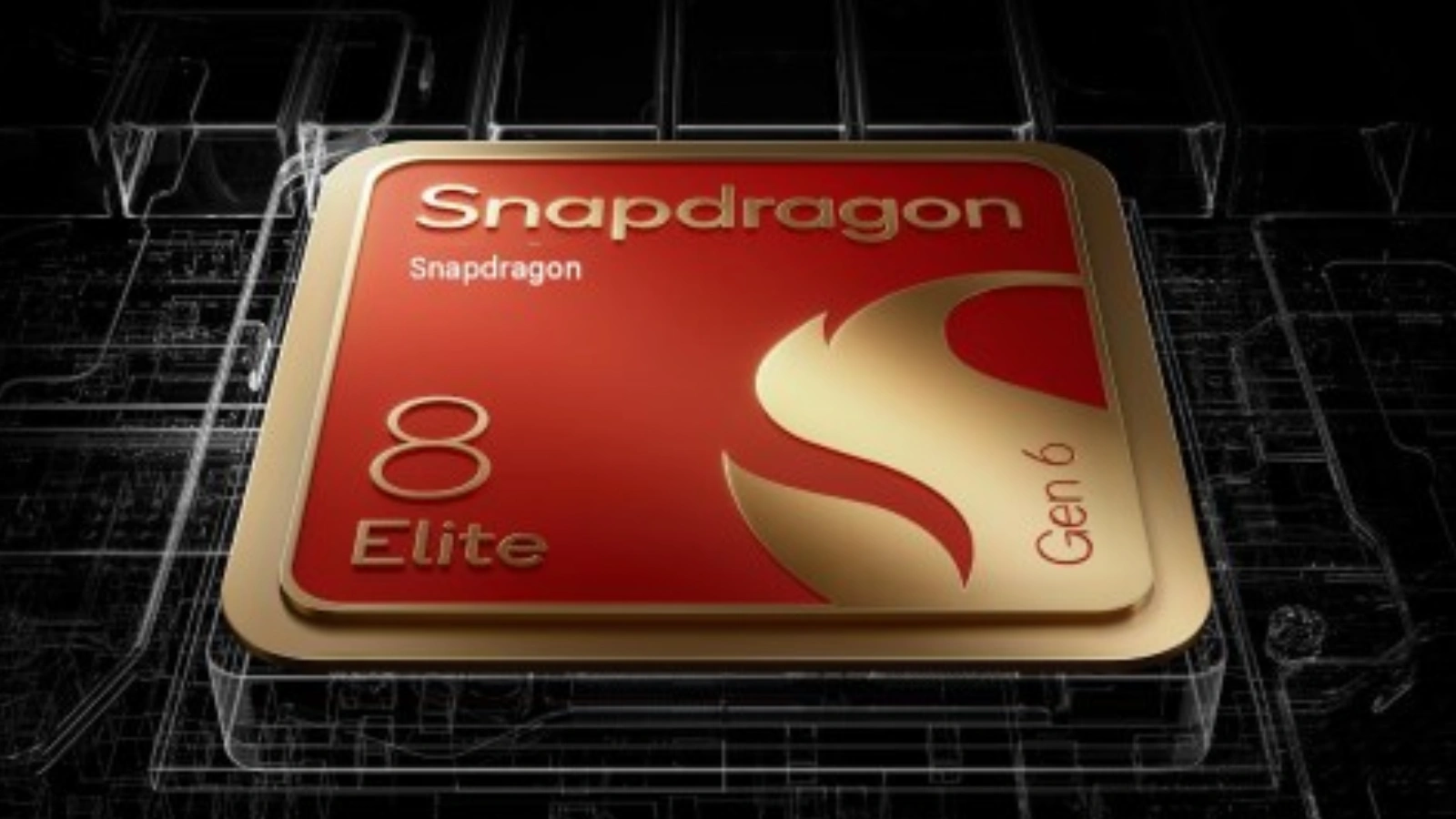
Qualcomm unveiled the Snapdragon 8 Elite Gen 6 and Snapdragon 8 Elite Extreme Gen 6 on September 22, 2026, and major Android manufacturers are already lining up devices around the new platforms. Xiaomi, HONOR, iQOO, Motorola, OnePlus, OPPO, REDMI, RedMagic and vivo are among the confirmed partners, making the Gen 6 family one of the key platforms to watch for premium Android phones heading into the next flagship cycle.
Qualcomm has secured broad Android manufacturer support for its newly announced Snapdragon 8 Elite Gen 6 family, setting up the chips to appear across many of the next premium Android smartphones.
The company officially unveiled two platforms on September 22, the Snapdragon 8 Elite Gen 6 and the higher tier Snapdragon 8 Elite Extreme Gen 6. Qualcomm has confirmed HONOR, iQOO, Motorola, OnePlus, OPPO, REDMI, RedMagic, vivo and Xiaomi among the brands preparing devices based on the new platforms.
That wide support matters because Qualcomm is doing something different this generation. Instead of offering Android manufacturers a single Elite platform at the top of its smartphone range, it now has two flagship tiers. Phone makers can therefore choose between the standard Elite Gen 6 and the more powerful Extreme platform depending on the price, thermal design, cameras and performance goals of each phone.
Snapdragon 8 Elite Gen 6 Comes in Two Flagship Tiers
Both new processors use an advanced 2nm manufacturing process and Qualcomm’s latest Oryon CPU architecture, Adreno graphics and Hexagon NPU.
The Extreme model sits at the top of the range and is designed for the most demanding premium phones, particularly devices emphasizing gaming, advanced photography, professional video and intensive on device AI.
The standard Snapdragon 8 Elite Gen 6 shares much of the same underlying technology but gives manufacturers another option for premium phones where maximum performance is not the only priority. Qualcomm says it can deliver many of the same AI, gaming, imaging and connectivity capabilities to a broader range of high end smartphones.
| Feature | Snapdragon 8 Elite Gen 6 | Snapdragon 8 Elite Extreme Gen 6 |
|---|---|---|
| Manufacturing process | 2nm | 2nm |
| CPU | Qualcomm Oryon | Qualcomm Oryon |
| Prime CPU speed | Up to 5.0GHz | Up to 5.0GHz |
| GPU | New Adreno architecture | Higher performance Adreno with Neural Fusion |
| AI | Hexagon NPU | More powerful Hexagon NPU |
| Maximum photo support | Up to 320MP | Up to 320MP |
| Maximum video | Up to 8K at 30fps | Up to 8K at 60fps |
| Memory support | LPDDR5X and LPDDR6 | LPDDR5X and LPDDR6 |
| Storage | UFS 5.0 | UFS 5.0 |
| Mobile connectivity | X105 5G Modem RF | X105 5G Modem RF |
| WiFi | Up to WiFi 8 | Up to WiFi 8 |
| Positioning | Premium flagship | Top tier flagship |
The specifications show why buyers should pay attention to the exact processor name rather than assuming every Gen 6 phone offers identical capabilities. The Extreme model has advantages in areas such as graphics and video processing.
Which Brands Are Using Snapdragon 8 Elite Gen 6?
Qualcomm’s official launch announcement identifies a large group of Android manufacturers preparing smartphones using the new platforms.
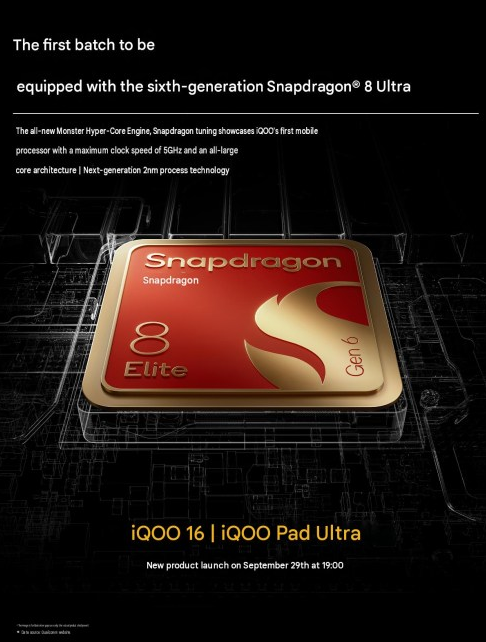
These include HONOR, iQOO, Motorola, OnePlus, OPPO, REDMI, RedMagic, vivo and Xiaomi.
Some manufacturers are already beginning to reveal how they will use the two tier strategy.
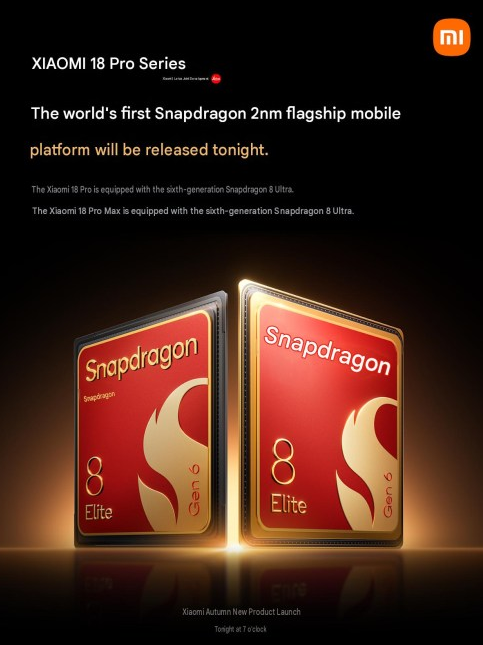
Current reporting points to Xiaomi’s upcoming flagship family using both levels of Qualcomm’s new silicon. The Xiaomi 18 Pro is reported with Snapdragon 8 Elite Gen 6, while the higher positioned Xiaomi 18 Pro Max is associated with the Snapdragon 8 Elite Extreme Gen 6.
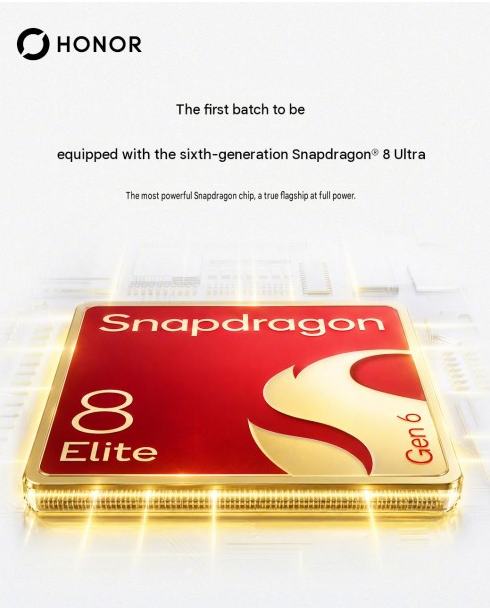
HONOR’s Magic9 Pro Max has also been linked with the Extreme platform, while iQOO is preparing its next flagship generation around Qualcomm’s new silicon.
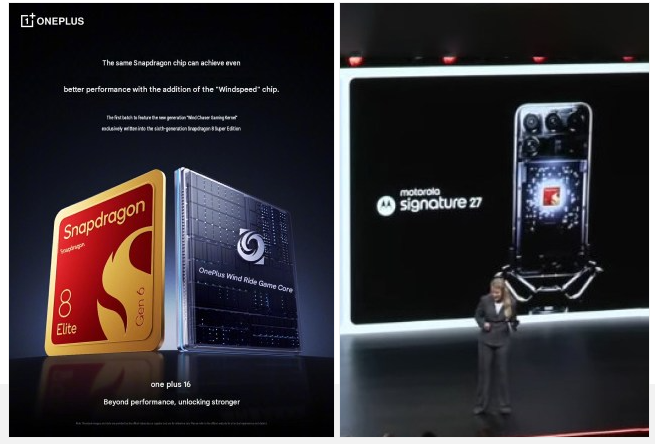
OnePlus, OPPO, RedMagic, vivo and Motorola are also part of the expanding Snapdragon Gen 6 ecosystem.
Exact configurations and regional launches can differ, however. A manufacturer confirming support for the Snapdragon 8 Elite Gen 6 family does not necessarily mean every model or every regional version will use the same chipset.
That distinction will be important for Qatar buyers once global and Middle East variants start reaching stores.
Why the New 2nm Process Matters
Moving to a 2nm process is about more than fitting additional transistors onto a chip.
For smartphone users, the most useful gains could come from the relationship between performance and power consumption. Qualcomm is making substantial efficiency claims for its new CPU and GPU designs compared with the previous generation.
Efficiency is especially important in Qatar and other GCC markets.
Premium phones are frequently used for navigation, photography, mobile data, video recording and gaming in warm conditions. A faster processor that continuously generates excessive heat can reduce clock speeds and battery life.
A more efficient platform potentially gives manufacturers additional thermal headroom.
That does not automatically mean every Snapdragon 8 Elite Gen 6 phone will stay cool. Cooling systems, chassis materials, software tuning, battery design and manufacturer performance profiles still play major roles.
Real retail devices will therefore need independent thermal and battery testing before firm conclusions can be made.
Up to 5GHz Oryon CPU Pushes Mobile Performance Further
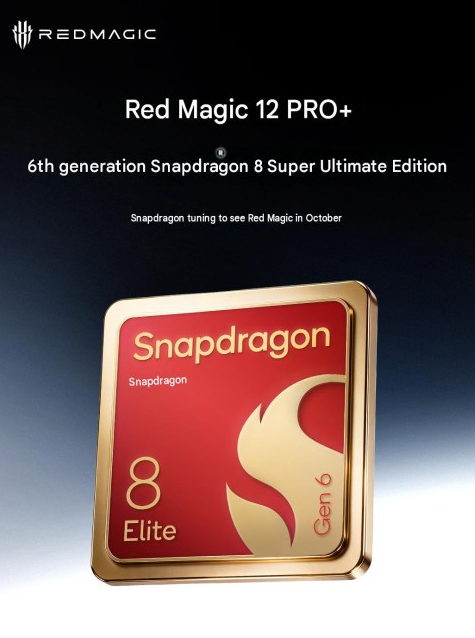
Another headline specification is the new Qualcomm Oryon CPU reaching up to 5.0GHz.
Both platforms use two Prime CPU cores running at up to 5.0GHz alongside six Performance cores capable of reaching up to 4.0GHz, according to published platform details.
A 5GHz figure looks impressive, but clock speed alone does not determine how fast a smartphone feels.
Sustained performance will depend on cooling, power limits, memory, storage and software optimization. A well tuned phone running the standard Elite Gen 6 could therefore provide a better long term experience than a poorly cooled Extreme device.
For buyers, independent battery, thermal and gaming tests will be more useful than comparing the 5GHz number by itself.
Gaming Could Be One of the Biggest Upgrades
Qualcomm is putting considerable emphasis on graphics with this generation.
The Extreme platform introduces Adreno Neural Fusion, which combines graphics processing with AI based techniques. Qualcomm says the technology can help with functions such as intelligent graphics processing while targeting richer visuals and longer gaming sessions.
This direction is important for mobile gaming.
Rather than relying entirely on conventional rendering power, future games can increasingly use AI assisted reconstruction, resolution enhancement and frame technologies to produce better visuals without requiring every pixel to be rendered conventionally.
For Qatar’s growing premium smartphone and mobile gaming market, that could make phones using the Extreme chip particularly interesting.
Still, gaming performance varies significantly between manufacturers. Cooling systems and software tuning will remain just as important as the processor badge.
On Device AI Is Becoming a Core Part of the Chip
Qualcomm’s other major focus is agentic AI.
The idea is to move beyond AI that simply responds to individual prompts. Qualcomm wants future phones to run more personalized AI functions locally, learning from user behavior and helping perform tasks across the device.
The Snapdragon platforms combine the Hexagon NPU with additional sensing and AI hardware intended to process more information directly on the smartphone. Qualcomm says this approach can allow AI experiences to become more personal while keeping more data on the device.
This could eventually affect functions such as voice assistance, photo organization, communication, scheduling and automatic actions across applications.
There is an important limitation, though.
The chipset provides the computing foundation. Whether these features become genuinely useful will depend heavily on Android, individual manufacturers, app developers and the AI models running on each device.
Buyers should therefore avoid choosing a phone solely because its processor supports agentic AI. The software implementation matters just as much.
Extreme Gen 6 Targets Serious Smartphone Video
The Snapdragon 8 Elite Extreme Gen 6 also takes a notable step forward in mobile video.
The Extreme platform supports recording at up to 8K 60fps, while the standard Snapdragon 8 Elite Gen 6 tops out at 8K 30fps. The Extreme version can also support 4K slow motion at up to 240fps.
Qualcomm has also introduced imaging technologies including Advanced Professional Video support and Intelligent Pixel Control.
For creators, these capabilities could give flagship Android phones more flexibility for high resolution recording and post production.
But chipset support should not be confused with guaranteed camera quality.
Lens quality, sensor size, stabilization, image processing and a manufacturer’s camera tuning remain critical. A phone supporting 8K 60fps on paper will not automatically produce better video than another device recording at a lower resolution.
LPDDR6 and UFS 5.0 Prepare Phones for Faster AI and Apps
Both Gen 6 platforms support LPDDR6 memory and UFS 5.0 storage, alongside LPDDR5X support.
This may sound less exciting than a 5GHz processor, but faster memory and storage can have a meaningful effect on future smartphones.
AI models need rapid access to large amounts of data. High resolution camera processing, large games and increasingly complex applications a meaningful effect on future smartphones.
AI models need rapid access to large amounts of data. High resolution camera processing, large games and increasingly complex applications also r memory bandwidth and faster storage.
The combination of a new CPU, GPU, NPU, LPDDR6 and UFS 5.0 therefore matters more than any one component viewed separately. citeturn1search5
5G Advanced and WiFi 8 Prepare for Future Networks
Connectivity also receives a major upgrade.
The new Snapdragon platforms use Qualcomm’s X105 5G Modem RF system, with support for 5G Advanced and peak theoretical downg 14.8Gbps.
FastConnect 8800 adds support for WiFi 8, alongside existing WiFi generations, while Bluetooth 6.0, Ultra Wideband and Thread are also supported. citeturn1search5
These peak figures should not be interpreted as speeds buyers will normally see in Qatar.
Actual mobile performance depends on the operator, spectrum, network congestion, location and the bands enabled in each phone.
The important point for GCC shoppers is that the platform is designed for newer network standards and gives manufacturers a strong foundation for flagship connectivity.
What Snapdragon 8 Elite Gen 6 Means for Qatar Buyers
For Qatar consumers planning to buy a premium Android phone, the Snapdragon 8 Elite Gen 6 generation introduces another specification that needs careful checking.
It will no longer be enough to see Snapdragon 8 Elite Gen 6 in a product description.
Buyers should check whether the device contains the standard Elite Gen 6 or Elite Extreme Gen 6, particularly if gaming, professional video recording or maximum AI performance is a priority.
Regional specifications also matter.
Before buying an imported model, Qatar customers should confirm supported 4G and 5G bands, eSIM support, local warranty coverage, charger specifications and whether manufacturer software features work fully in the Middle East.
Official Qatar pricing for most of the upcoming Gen 6 flagship phones has not yet been announced.
Should You Wait for a Snapdragon 8 Elite Gen 6 Phone?
If you already own a recent premium flagship that performs well, the new processor announcement alone is not a strong reason to replace it.
The more interesting case is for buyers already planning a flagship purchase during the upcoming product cycle.
The combination of 2nm manufacturing, improved graphics, faster AI processing, advanced video capabilities, LPDDR6, UFS 5.0 and newer connectivity standards makes the Gen 6 generation worth watching.
But the processor is only one part of a smartphone.
Battery capacity, cooling, display quality, camera sensors, software support, repair options and Qatar pricing will ultimately determine which of these upcoming phones offers the most suitable package for an individual buyer.
Key Takeaways
- Qualcomm has officially introduced the Snapdragon 8 Elite Gen 6 and the more powerful Snapdragon 8 Elite Extreme Gen 6, both manufactured on a 2nm process.
- HONOR, iQOO, Motorola, OnePlus, OPPO, REDMI, RedMagic, vivo and Xiaomi are confirmed to launch flagship devices using the new Snapdragon platforms.
- For Qatar and GCC buyers, the bigger story is not simply higher benchmark performance. The new chips target better power efficiency, local AI processing, advanced cameras, faster gaming and next generation connectivity.
Final Thoughts
The Snapdragon 8 Elite Gen 6 generation is shaping up to have broad support across the premium Android market. Qualcomm’s decision to offer both standard and Extreme versions also means buyers will need to look more carefully at the exact chipset inside each flagship rather than relying on the Snapdragon Elite name alone.
The 2nm process, 5GHz Oryon CPU, upgraded Adreno graphics, stronger on device AI, UFS 5.0, LPDDR6 and next generation connectivity provide phone makers with an ambitious hardware platform. The next question is how effectively Xiaomi, HONOR, OnePlus, OPPO, vivo, Motorola and other manufacturers turn that hardware into real improvements in battery life, cameras, gaming and everyday performance.
For Qatar buyers, MobileLand.qa will continue tracking Snapdragon 8 Elite Gen 6 smartphones as manufacturers confirm Middle East availability, Qatar pricing, configurations and launch dates.
Source (in Chinese)